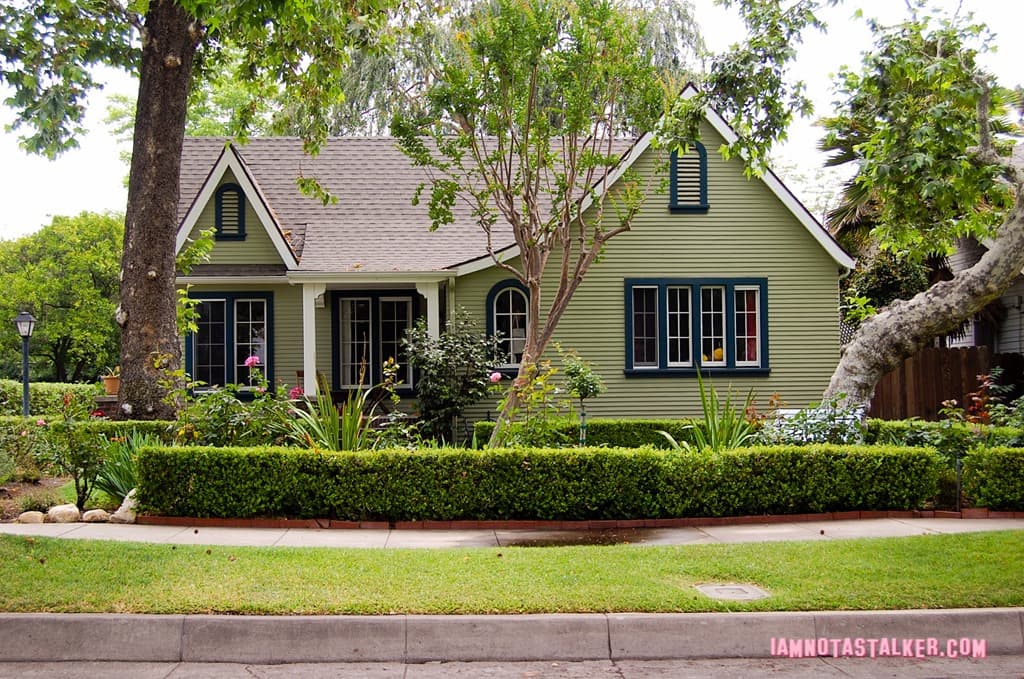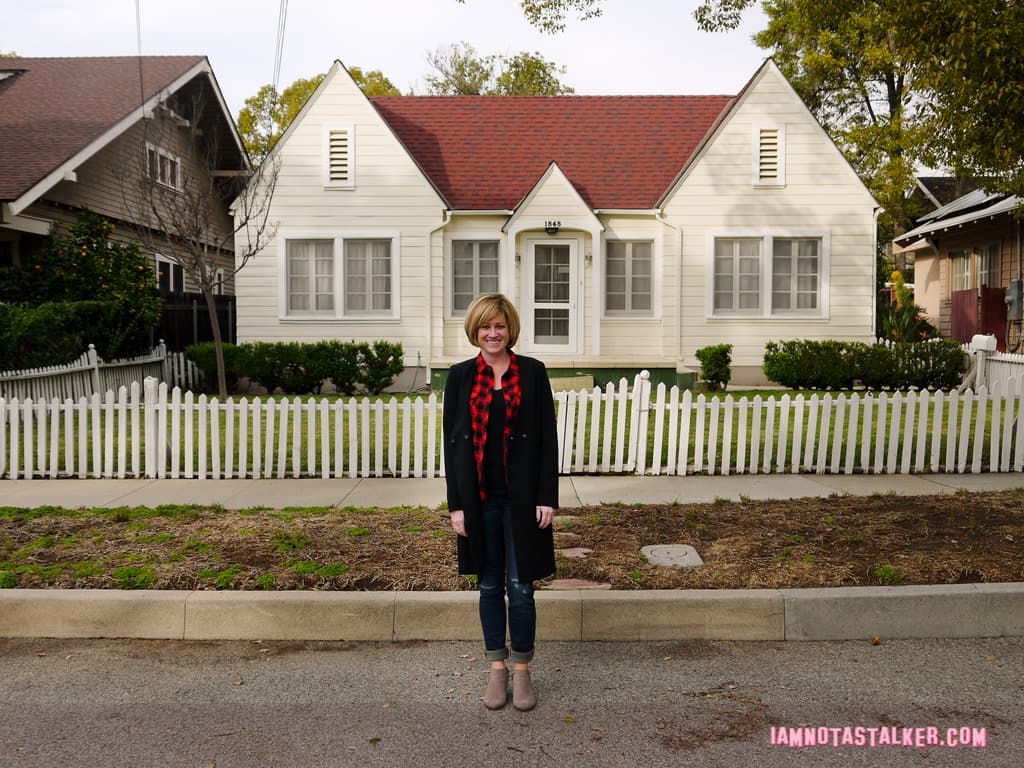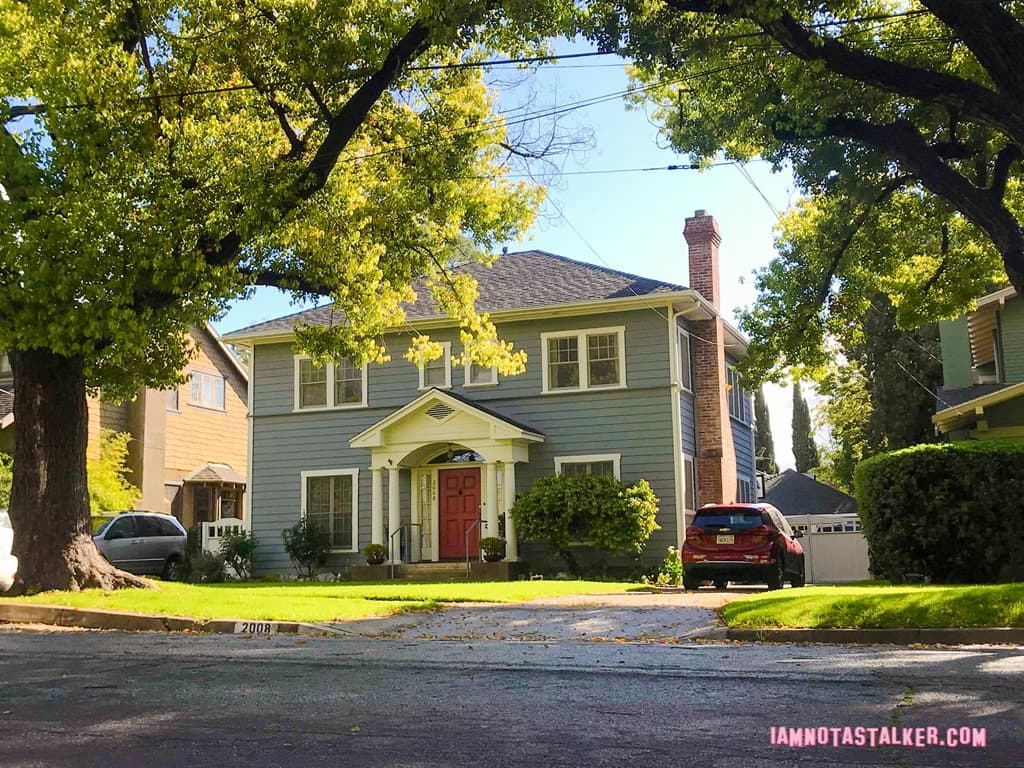
Calling all horror fans! The Cunningham house from 1983’s “Christine” is currently for sale. You can read about it over at Dirt.

Your definitive source to filming locations and all things Hollywood!

Calling all horror fans! The Cunningham house from 1983’s “Christine” is currently for sale. You can read about it over at Dirt.
The house where Dan Gallagher (Joshua Jackson) lives in Paramount+’s upcoming Fatal Attraction miniseries is a film favorite. Head over to Dirt to read all about it.
The house from Mama’s Family has a new role as the home of Paige Alexander (Kerry Washington) on the Hulu show Unprisioned. You can read all about it over at Dirt.
Calling all She’s Out of Control fans! The 1989 classic is finally available to stream on Amazon Prime. And you can read all about the house at its center in my latest post for Dirt.
Curious where the Phelps family home from the new Courteney Cox series Shining Vale is located? Then head over to Dirt to read my latest post.
Head over to Dirt to check out my latest post about the gorgeous Craftsman where Death at a Funeral was filmed.
Three different sites portray the vampires’ lair on the horror-comedy series What We Do in the Shadows, including South Pasadena’s famous Torrance-Childs House. Head over to Dirt to read all about them!
Were you one of the legions of fans who watched the Netflix movie He’s All That this past weekend? If so, be sure to check out my Dirt post about the house where Cameron Kweller (Tanner Buchanan) lives in it.
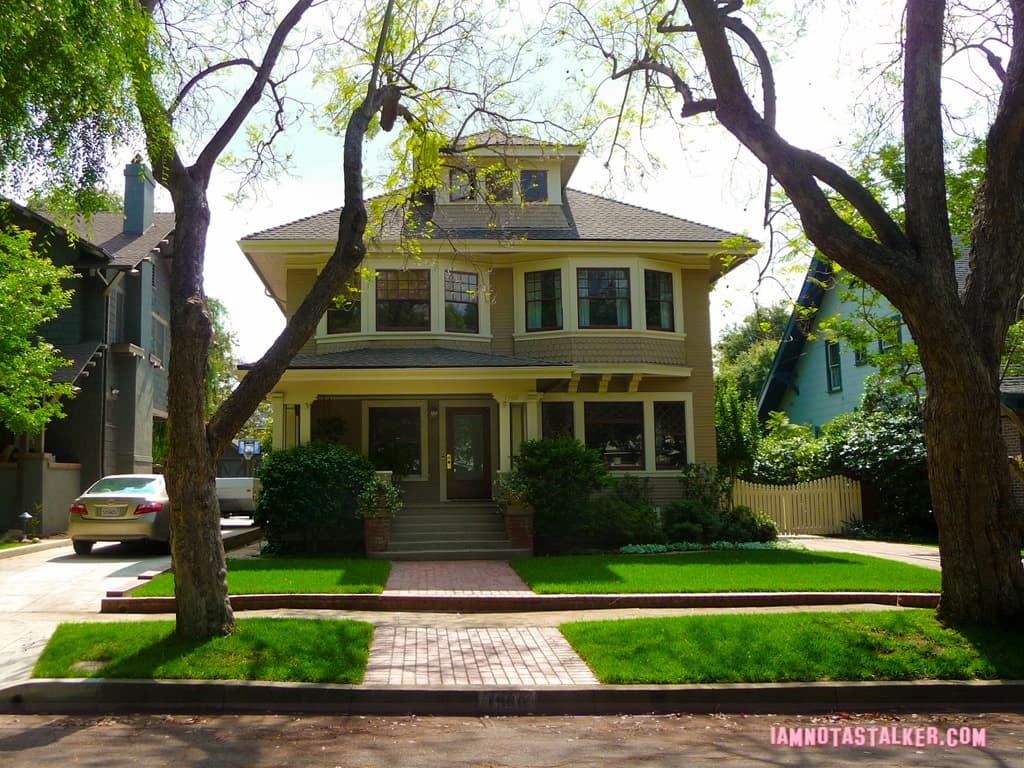
It is no secret that the San Gabriel Valley is chock full of gorgeous Craftsman homes. Never have I come across a neighborhood more saturated, though, than Oaklawn, the tiny enclave in South Pasadena that I blogged about on Wednesday. The 0.2-mile curved street, made up of 27 stunning houses, features some of the prettiest Arts and Crafts properties I have seen, including the one at 216 Oaklawn Avenue, which portrayed the residence of the Browning family in Zathura: A Space Adventure. My friend/fellow stalker Owen alerted me to the home last December, saying it was basically a main character in the 2005 family film and would make for a good post. I had never seen the movie at the time, but one look at the screen caps included in his email and I knew I had to stalk the place! I finally made it out there a couple of weeks ago in what amounted to a stalking twofer as Mary’s residence from Why Women Kill is right next door. Just a few days later, my mom and I sat down to watch Zathura. Owen was right. Though the movie is just OK (it’s basically a mediocre version of Jumanji set in space), the house is undeniably the star and definitely worthy of a post.
[ad]
There seems to be quite a bit of confusion floating around online regarding the residence’s provenance as well as its amenities.
From what I have been able to gather, though, the Craftsman boasts 4 bedrooms, 4 baths, 3,805 square feet, wood detailing throughout, a fireplace, an upgraded kitchen, French doors, a pool, a hot tub, and a 0.45-acre lot.
Per some documents on the City of South Pasadena website, 216 Oaklawn was a speculative home constructed for builder G. W. Stimson in 1908 at a cost of $6,800. Known as the F.N. Finney Residence, the property is said to have been designed by prolific architects Charles and Henry Greene. Other sources, though, assert that the home is known as Villa Dora and that it was built in 1912 by architect G. Lawrence Stimson.
Regardless of its history, there’s no debating the pad is architecturally incredible!
It is not hard to see how it got chosen to appear in Zathura. The house belongs on the screen!
Even the driveway is picturesque!
And the tree out front? Come on!
In Zathura: A Space Adventure, two young brothers, Danny (Jonah Bobo) and Walter Browning (Josh Hutcherson), discover a retro board game packed away in their basement while being babysat by their inattentive older sister, Lisa (Kristen Stewart). They, of course, start to play the game, which immediately rips their house from the ground, sending it into outer space where they have to battle various otherworldly adversaries. The actual exterior of the Oaklawn home is only shown twice, in the movie’s opening and closing scenes.
The residence in the Chris Van Allsburg book on which the film is based is much more traditional in style, as you can see here. But for the movie, producers zeroed in on using a Craftsman to keep the story visibly compelling. The production notes state, “Since Zathura: A Space Adventure takes place in one location, the house had to be as visually interesting and integral to the film as any of the characters. This was a major challenge for [production designer J. Michael] Riva who worked closely with the filmmakers to select just the right style and look for the house. After much discussion, they decided to go with a classic California Craftsman-style home. ‘We didn’t want the audience to feel trapped in a house for the whole movie,’ says [director Jon] Favreau. ‘So we decided to make it as interesting to look at as we could, something so spectacular than when it comes apart in the course of the film, you really feel like it’s a tragedy that this beautifully restored Craftsman-style house is being destroyed.’” They certainly succeeded to that end. My heart broke a little each time a piece of the residence was damaged.
An exacting scale model was constructed for the scenes in which the Browning residence is shown floating through space.
You can see images of the model on the Hooked on Houses website.
The miniature is also featured on the movie’s poster.

The interior of the Browning residence was nothing more than a studio-built set – an exquisite and elaborate studio-built set – which becomes quite obvious as it gets destroyed into virtual oblivion throughout the film. The actual inside of the Oaklawn house is much smaller and much less Craftsman-y than its big-screen counterpart, as you can see in these interior images.
Of the set, the production notes state, “The filmmakers also wanted the house to stand out against the coldness of deep space and the metallic materials used for the spaceship. The Craftsman style lent itself perfectly to that end and Riva was also able to fashion a welcoming interior. ‘The idea was to create a hospitable environment, using warm tones and colors with lots of wood,’ explains Riva, ‘in direct counterpoint to the coldness of space — a womb-like environment that the characters could all survive in. As that got destroyed, like an island being swallowed up by the high tide, the world they inhabited became smaller and smaller, as if the life-giving sustenance of the house, which protects them from oblivion, was diminishing. We just loved the contrast in the colors to suggest that.’” Riva did a spectacular job! The set was so intricate, it truly had the look and feel of a real home, which is exactly what Favreau was going for. He says, “I came up through independent film, where you’re usually shooting on location. I hate when it looks like you shot on a set instead of on location.” So realistic was the set, in fact, that until the destruction began, I was convinced filming had taken place inside the Oaklawn property.
Inspiration for the set came from some real residences. Favreau explains, “We really wanted the house to feel like something, and feel old, and like it had some character. All the details were chosen from different famous houses, even the fireplace and the fixtures.” Well I, of course, read those words and got right to identifying exactly which pads in particular inspired the design. It was not too hard to pin things down. The production team looked no further than two of Pasadena’s most famous Craftsmans – the Gamble House and the Blacker Estate, both of which I am very familiar with. The Brownings’ two fireplaces were modeled after one at the Gamble House. You can see an image of it here.
The front door was likely inspired by that of the Gamble House, as well, though it was built on a much smaller scale.
And the staircase is a copy of one at the Blacker Estate, which you can see here.
For more stalking fun, follow me on Facebook, Twitter, Instagram, Los Angeles magazine, and Discover Los Angeles.
Big THANK YOU to my friend/fellow stalker Owen for telling me about this location! ![]()
Until next time, Happy Stalking! ![]()
Stalk It: The Browning residence from Zathura: A Space Adventure is located at 216 Oaklawn Avenue in South Pasadena. Mary’s house from Why Women Kill can be found right next door at 224 Oaklawn Avenue.
Today marks the third time I’m blogging about Why Women Kill, which is a bit surprising considering I’ve barely watched any of the 2019 CBS All Access series. But while scanning through episode 6, “Practically Lethal in Every Way,” making screen captures for my recent post on Bistro Garden, the image of a massive Craftsman home came into view, and my heart was set aflutter! I stared in awe at the home, which belongs to Mary (Analeigh Tipton) and her abusive husband, Ralph Vlasin (Scott Porter), on the 1963 portion of the show, and decided to track down it right then and there. Thanks to its Arts and Crafts architecture, I had a feeling the pad was located in the Pasadena area, though I had never come across anything quite like it in all my years living there. I did a Google search for “Why Women Kill,” “filming,” and “Pasadena,” which garnered no fruitful results. Firm in my assertion that the house was in Crown City and knowing that productions sometimes shorten or abbreviate longer titles, I did a second search for “WWK,” “filming,” and “Pasadena,” and, sure enough, an article came up which stated that in June 2019 the series spent two days shooting on the 200 and 400 blocks of Oaklawn Avenue in South Pasadena. I headed right on over to the 200 block via Street View, dropped down the little yellow man, and there was Mary’s Craftsman at 224 Oaklawn!
[ad]
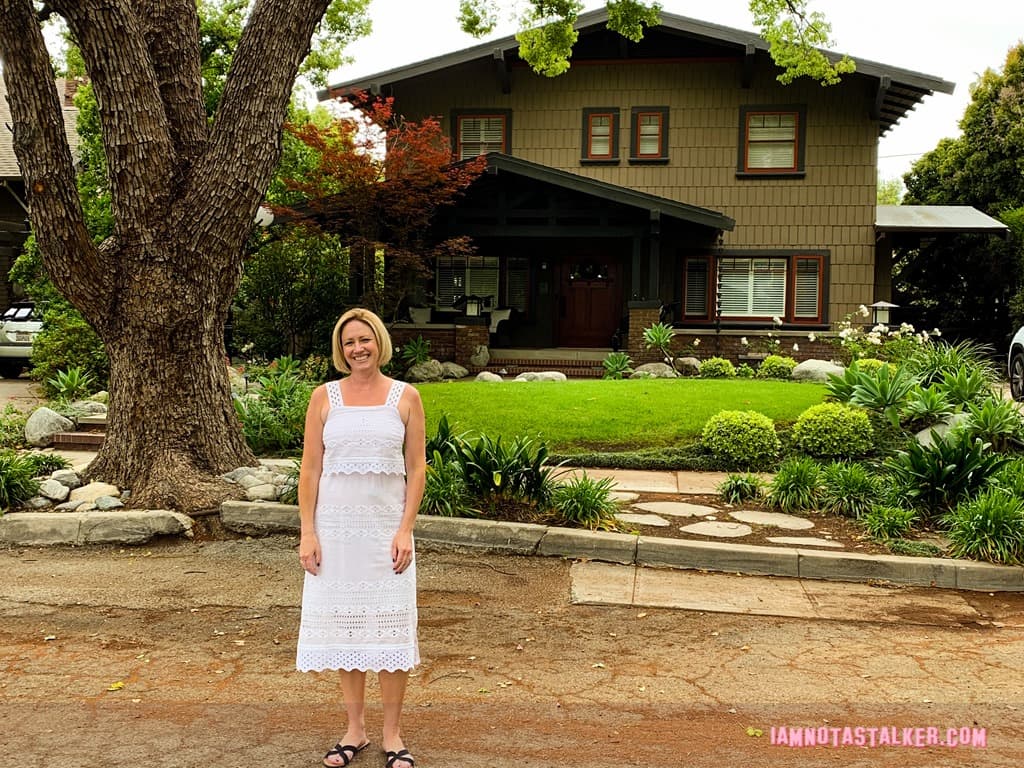
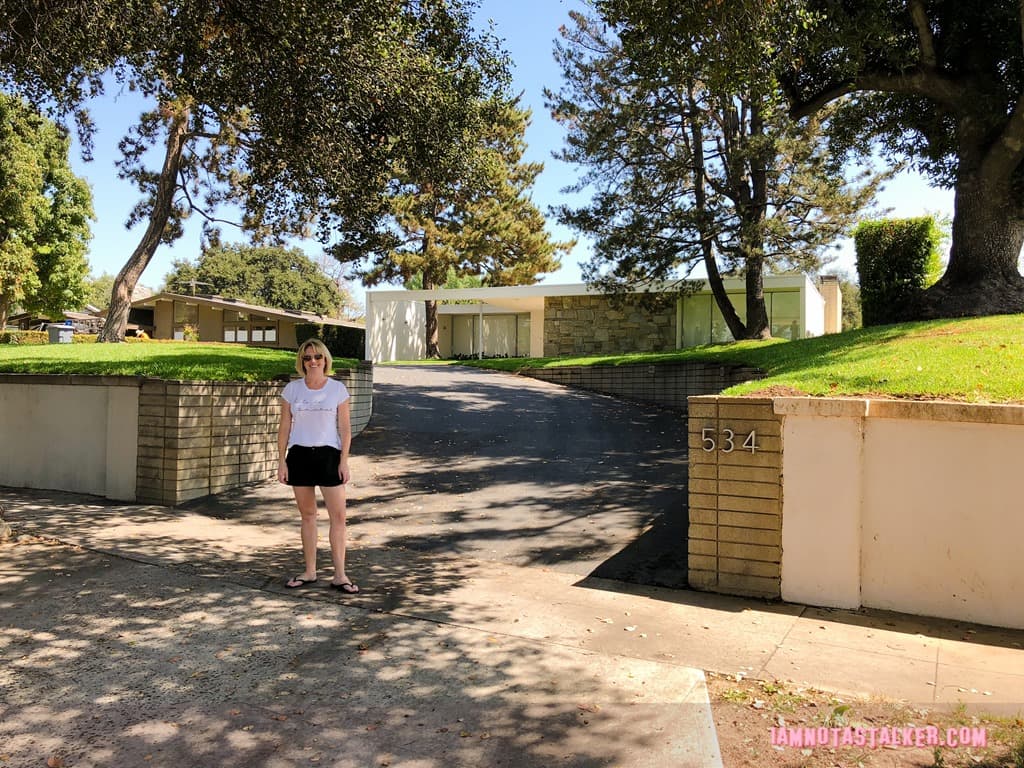
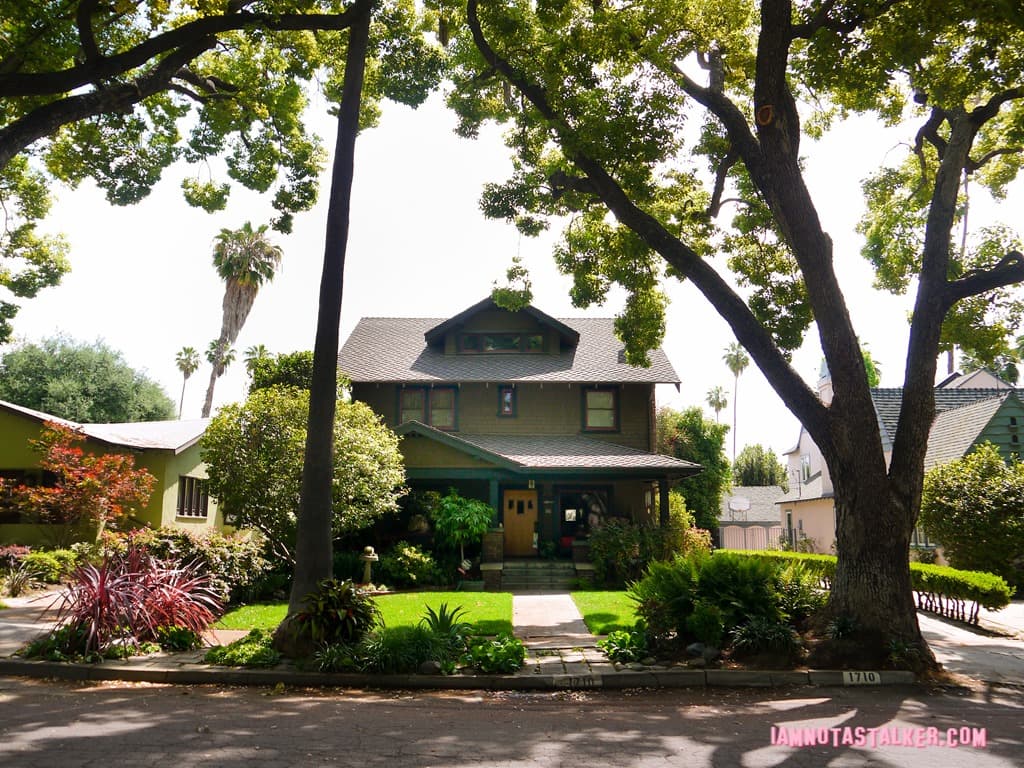
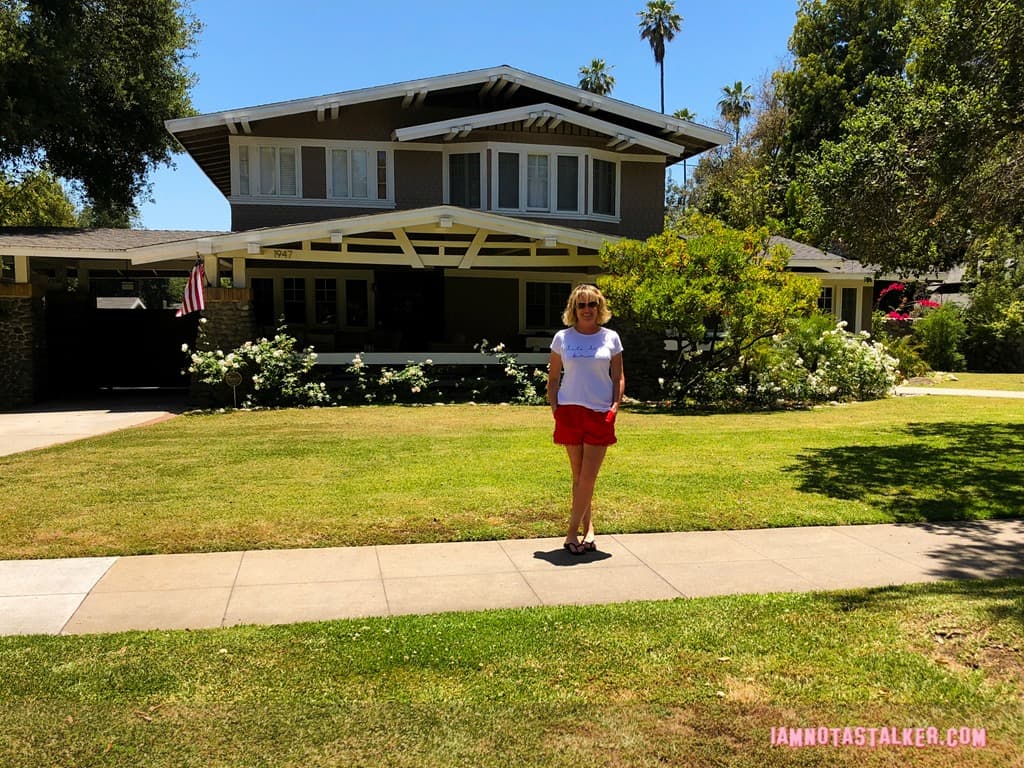
I had never visited the street before and, in fact, only first heard about it last December thanks to my friend/fellow stalker Owen who emailed to alert me to another of its famous Craftsmans – 216 Oaklawn, aka the Browning residence from Zathura: A Space Adventure. (I’ll be covering that property in a later post.) The enclave, which consists of a small 0.2-mile curved stretch of road with a smattering of about thirty dwellings at South Pasadena’s northern edge, was established in 1904. Oaklawn was the brainchild of the South Pasadena Realty and Investment Company and Henry and Charles Greene, the prolific architects responsible for the vast majority of the area’s landmark Craftsmans. The brothers designed the layout of the street, which was initially centered around a large oak tree that no longer stands (hence the name), as well as a reinforced concrete footbridge leading to Fair Oaks Avenue (where residents could access local streetcars) and a waiting station. Lots were sold undeveloped. The subdivision was referred to in early advertisements as “Suburb de Luxe” and the homes eventually built there certainly lived up to the hype! I was flabbergasted wandering the neighborhood, gawking at the massive, architecturally stunning properties surrounding me. From Craftsman homes to Tudors to mid-century manses, each one is more spectacular than the last! Two that caught my eye during my visit are pictured below.
As Owen pointed out to me last December, Oaklawn also boasts a striking entrance feature. He wrote, “When making screenshots, I noticed something in the background that I couldn’t ID. I was like, ‘What the hell are boulders doing on a residential street?!’ I went to Google’s street view to check it out, and I came across something interesting and unusual that I had never known about. You may be well aware of it, of course, but at the end of Oaklawn Avenue in South Pasadena, near the Zathura house, are rustic portals on each side of the street. These picturesque portals, which look like something straight out of a lifestyle magazine, were also designed by Greene and Greene.” I had not been aware of the portals – as I said, I had never even heard of the street before! – but was intrigued and had to take a look while stalking the neighborhood.
The elaborate stone structures, initially designed to frame the central oak, were constructed long before any homes lined the street and, per the South Pasadena Preservation Foundation, “served as advertisements to the undeveloped lots.”
Today, they welcome visitors to the picturesque idyll.
Despite their substantial influence on Oaklawn, there’s no concrete evidence that Greene and Greene designed any of the enclave’s homes (though one resident speculates the street boasts as many as four properties that can be attributed to the brothers). The majority of the lots were sold off in 1907 to various builders, including G.W. Stimson. His son, architect G. Lawrence Stimson, is credited with designing many of the houses, including Mary’s from Why Women Kill.
In real life, the 1910 home features 5 bedrooms, 4 baths, 3,930 square feet, a dining room with a cast aluminum ceiling, a carriage house designed by Frederick L. Roehrig, a fireplace with Grueby Faience Company tile, intricate Craftsman detailing, hardwood flooring, built-ins galore, a butler’s pantry, a 0.45-acre lot, and a backyard pond.
You can check out interior photos of the massive abode here.
The property pops up numerous times on Why Women Kill, first in the scene in which Beth Ann Stanton (Ginnifer Goodwin) introduces herself to Mary and Ralph, her new neighbors, in episode 6, “Practically Lethal in Every Way.” The residence is said to be situated across the street from Beth Ann’s supposed Pasadena estate, so it is rather ironic that neither property is actually in Crown City. Mary’s pad is, of course, in South Pas and Beth Ann’s, the mansion at the center of the series’ storyline, is a good 15 miles away at 113 Fremont Place in Hancock Park.
Mary’s house goes on to appear in the episodes “I Was Just Wondering What Makes Dames Like You So Deadly” and “Kill Me as if It Were the Last Time.”
The home is just as incredible in person as it is onscreen.
The interior, namely the living room with the Grueby tile fireplace, is also featured on the show, as you can see in the screen capture below as compared to the MLS image from 2012, when the pad was last on the market.
On Why Women Kill, Mary’s staircase (which is visible just beyond the front door) is very Craftsman in style with a natural wood finish, but, per the listing photos, at the time it was on the market it was painted white.
I am not sure if the new owners changed the coloring back to the original wood or if the show’s production team did, but either way, it was a good move! The natural wood is so much more appropriate to the architecture of the home, not to mention infinitely prettier.
For more stalking fun, follow me on Facebook, Twitter, Instagram, Los Angeles magazine, and Discover Los Angeles.
Until next time, Happy Stalking! ![]()
Stalk It: Mary’s house from Why Women Kill is located at 224 Oaklawn Avenue in South Pasadena. The home from Zathura: A Space Adventure can be found right next door at 216 Oaklawn.